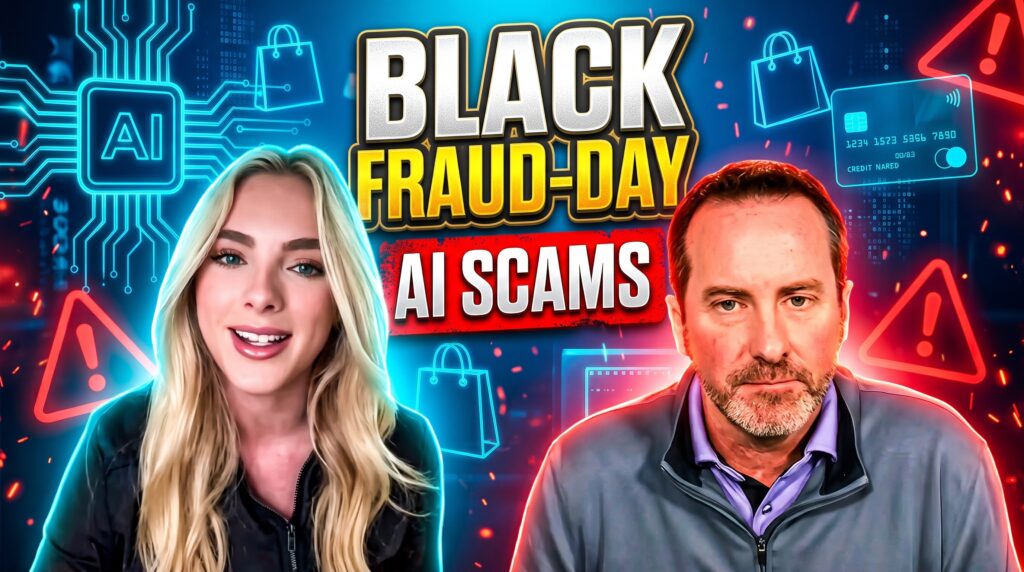

As holiday shoppers race online to score the biggest Black Friday and Cyber Monday bargains, scammers are using artificial intelligence to make fake retail websites and phony delivery alerts more convincing than ever. This week on Coast to Coast with Heather Dawson, we’re sharing practical, timely advice to help keep your family’s personal and financial information safe before you click “buy.”
It’s part of a growing nationwide problem: according to the FTC, Americans reported losing a record $15.9 billion to fraud last year. Joining us to break down how to stay protected is Thomas Clayton, cybersecurity expert and President and COO of Aura. As Clayton explains, scammers love the holiday season because shoppers are rushed, deal-hungry, and expecting packages—and when you’re acting with a sense of urgency or worrying about missing a deal, you’re far more likely to click before thinking.
With the rise of AI, fraudsters can now rapidly generate realistic lookalike e-commerce websites, convincing reviews, and personalized messages that appear to come from trusted retailers—all at massive scale. In fact, a recent Aura survey found that more than half of power AI users initially believed an AI-enhanced scam was legitimate. “If they can get fooled, any of us can get fooled,” Clayton warns.
To stay safe this shopping season, Clayton recommends sticking to the basics: be cautious of blowout deals popping up on social media, double-check URLs for lookalike retailer websites, and stay skeptical of text or email offers that feel too good to be true. Most importantly, if you think you may have fallen for a scam, act fast—contact your bank or credit card company immediately, change any compromised passwords, and keep monitoring your accounts for suspicious activity. For more cybersecurity tips and resources, visit aura.com.
Also on Coast to Coast
-
Holiday Entertaining Made Easy: Festive Bites, Sparkling Sips & Stress-Free Hosting Tips!
-
Thanksgiving Special: San Miguel de Allende, Festive Bites, Holiday Scams & More!Feature
-
The Nutcracker Soirée Brings Holiday Tea and Ballet Magic to Orlando with ette hotel and Orlando Ballet!
-
Meaningful Holiday Jewelry Gifts with Heart: The Honest Jeweler & Shaneli x Cancer Culture
-
The Surprising Real-Life Values of Your Favorite Christmas Movie Homes!